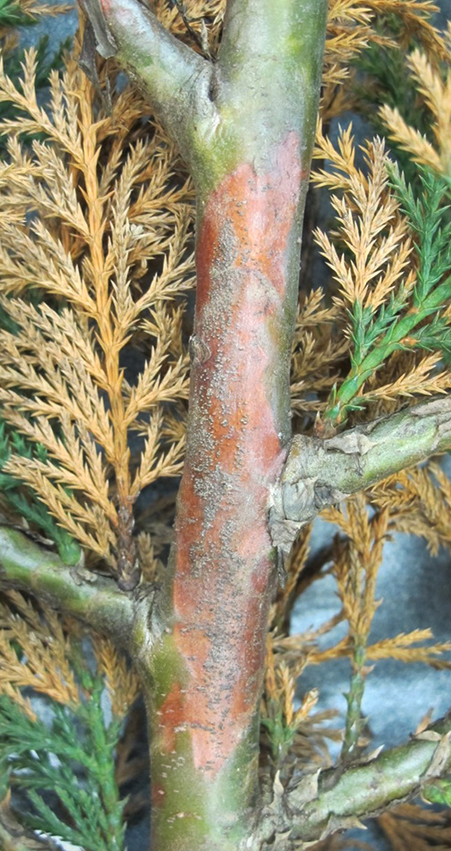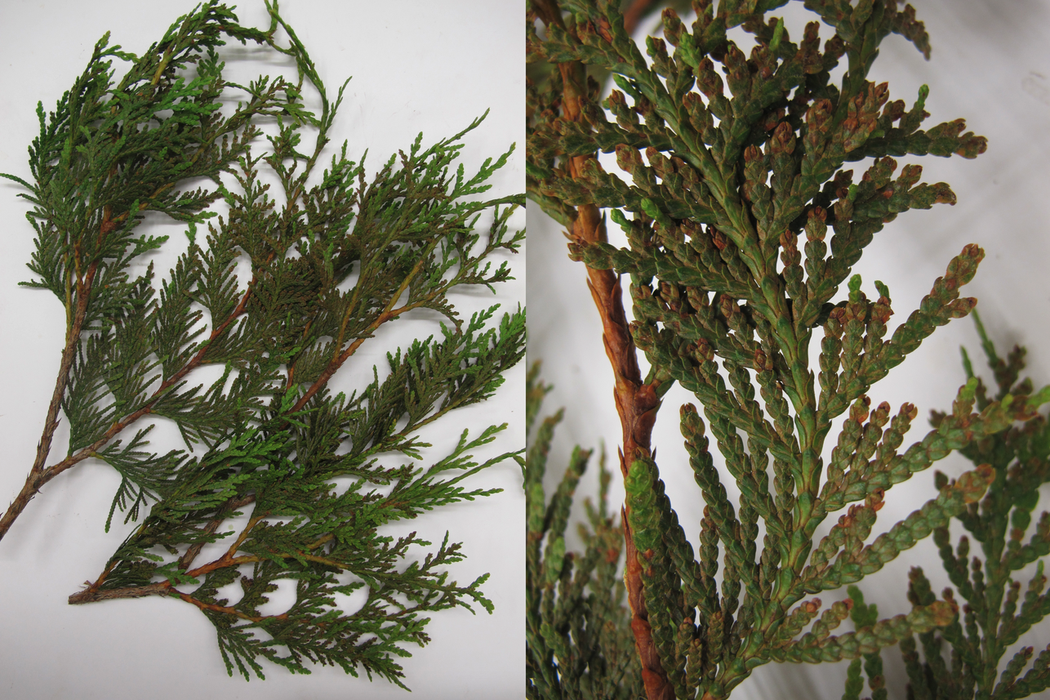
Several species of “cypress”-type conifers (family Cupressaceae) are widely planted in North Carolina landscapes. Among the most common are arborvitae (Thuja spp.), Leyland cypress (xHesperotropsis leylandii), and Japanese cedar (Cryptomeria japonica). These trees are sometimes used as specimen plants, but are often placed together in rows to form screens or yard barriers.
These trees are susceptible to numerous diseases, arthropod pests, and abiotic stressors, including those caused by human activity. They also undergo changes in appearance as they mature. This step-by-step guide will help you when dealing with these issues. In some cases it will lead you to a diagnosis; in others it will lead you to the conclusion that a physical and/or image sample needs to be submitted.
To learn more follow the step by step guide.